
In this article, we cover the best ways to clear your DNS cache on a Mac, including the different ways you can do that depending on the macOS you are running.
Cloudflare is one of the world’s topmost company working in the web performance.
Your DNS cache acts like a memory that your Mac refers to when trying to figure out how to load a website.
Flushing the DNS isn’t a difficult task but the process changes with every new operating system. We’ll walk you through the steps needed to manually reset your DNS on latest macOS versions. But if you like you can fast forward to the automatic solution — with a free tool in CleanMyMac X.
What is DNS cache
So what’s DNS cache? It’s a list of domain names attributed to your last-visited websites. It’s not the same as recent online history. Domain name information is coded in numbers, for example, 174.142.192.113.
For example, when a website migrates to a new domain, its DNS address changes. Naturally, it becomes unreachable as your still Mac relies on the outdated DNS record.
So, DNS cache is a log book that translates this numerical information into human readable website names. After you’ve cleaned the DNS cache you may notice that some websites load slower — that’s perfectly normal. Your Mac has forgot them and is trying to access them from scratch.
- Mac uses Domain Name System (DNS) to access websites on its browser. Many people are not aware of this fact and completely ignore Mac DNS server settings. But if the DNS servers of your Mac are not functioning properly, then the websites may slowly or not load at all. Hence, it becomes crucial for every Mac user to know how to change DNS server.
- Free OpenDNS Mac OS X 10.4 Intel/PPC, Mac OS X 10.5 Intel/PPC Version 3.0 Full Specs. Visit Site External Download Site.
How to clear the DNS: The manual way
Before we get started, note that resetting the DNS cache will interrupt active web browsing activity so it’s worth closing your browser before performing a flush.
How to flush the DNS cache on macOS Mojave/Catalina
Are you familiar with Terminal? If not, no problem. All you’ll need to do is launch the Terminal app and paste in a couple of commands.
- Open the LaunchPad in the Dock and type in Terminal in the search bar.
- Enter the following syntax at the command line:
- Press Return, enter your password, and press Return again.
- You should now see a message saying “macOS DNS cache reset.”
- Exit the Terminal.
sudo killall -HUP mDNSResponder; sleep 2;
How to clear the DNS: The easy way
For those who want to get this done quickly, a much simpler alternative to clear the DNS cache on all versions of macOS is CleanMyMac X. This is a staple Mac cleaning solution and this app is notarized by Apple.
Flushing the DNS cache just so happens to be in its arsenal of features to help you do this.
To flush the DNS cache with CleanMyMac all you’ll need to do is download it — you can do that here for free.
Then…
- Launch CleanMyMac.
- Click on Maintenance from the sidebar menu.
- Select Flush DNS Cache.
- Click Run.
That’s it. Your DNS is all clear and everything should be back to normal. Or you can try one or more of the following methods.
How to clear the DNS on older macOS versions
The algorithm is the same, only the copy/paste command in Terminal will be different for each OS.
To flush DNS cache on macOS Sierra, paste this: sudo killall -HUP mDNSResponder;say DNS cache has been flushed
To flush the DNS cache in Mac OS X El Capitan and Yosemite, paste this:sudo dscacheutil -flushcache;sudo killall -HUP mDNSResponder;say cache flushed
Frequently Asked Questions
When should you flush or reset the DNS cache?
Flushing the DNS makes sense when you can’t open certain websites. Especially if they were perfectly available just a moment ago. You can also try this fix when your network slows down randomly or other network-related issues occur.
What will happen if I flush my Mac’s DNS cache?
Flushing the cache simply updates the entry on your Mac that corresponds to the server address. Next time you try to access this server i.e a website, it will load a bit slower —which is similar to cleaning your browser cache.
What are the alternatives to flushing the DNS cache on Mac?
If the above methods seem too technical, you may try to do a hard refresh in your browser. Another way to refresh outdated DNS entries is to delete browser caches.
Conclusion
Clearing the DNS cache on Mac isn’t something you’ll have to do often but it’s a good way to troubleshoot named server errors. Use the correct command for your operating system and you’ll be able to resolve issues within seconds. If, for whatever reason, the command doesn’t work or you don’t feel confident using the Terminal, CleanMyMac will do the job for you.
How To Change Dns For Mac
These might also interest you:
By Adela D. Louie, Last updated: December 18, 2019
Ever wonder what DNS servers on your Mac are? Would you want to know on when or how are this DNS servers work? Well, in this article, we are going to know more about the DNS server on your Mac and on how you can find them. So if you are one of those people who are actually curious about it, then this is for you.
Part 1: What is A DNS Server?
If a certain device such as your Mac does not have a DNS server, then you will not be able to access the internet on your device. This is because a DNS server is one of the most crucial parts of the DNS infrastructure. DNS stands for Domain Name System.
This is where you will be able to find the IP addresses and as well as the hostnames and the data that is used for you to fix any problems that the user might encounter on a certain website, a device or some other network system that is using an IP address. Truly, DNS is very handy.
Part 2: When Do We Use DNS Servers?

Once that a user types in a certain host or website or a URL on the address bar on one of their browsers, the DNS resolver will then immediately contact the DNS server for it to be able to find the IP address that is somewhat connected to the website that you are trying to access. And, once that the DNS server is not able to locate any information that it needs, then it will move along to the DNS server in the DNS hierarchy until such time that it was able to locate the data that it needs.
Dns For Macbook Pro
Part 3: How to Find DNS Server on Mac
Now, for you to be able to check on the DNS server that you have on your Mac, here are the steps that you should follow.
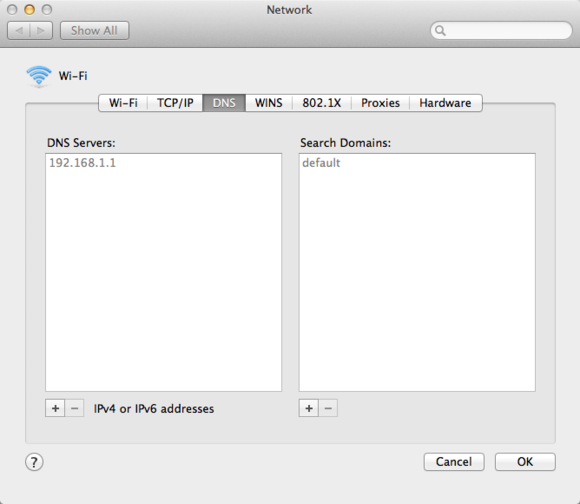
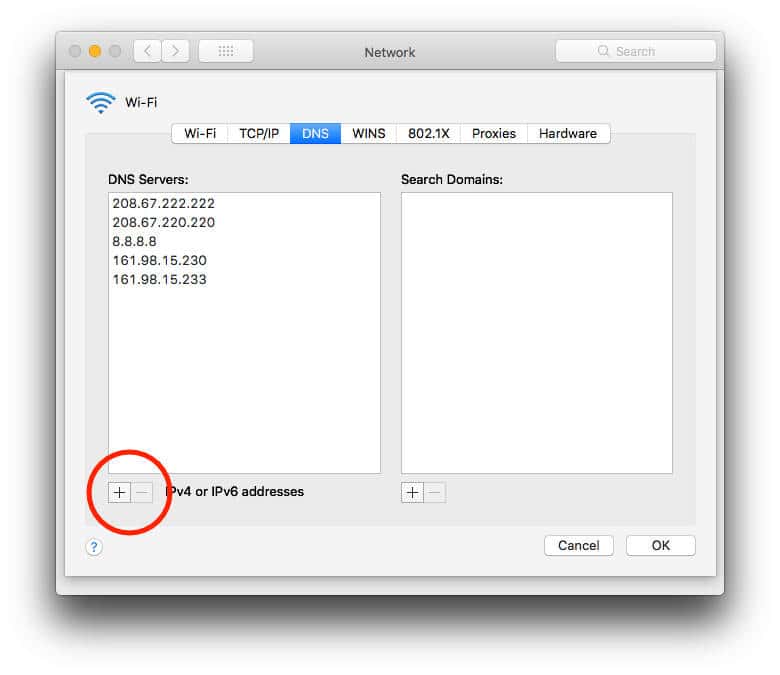
- Go ahead and launch System Preferences. You can see this from the Dock of your Mac or you can also go to the Apple menu and then choose “System Preferences”.
- And then, once that the System Preferences appears on your screen, go ahead and choose the “Network” icon. Then the network configuration will be shown on your screen. This will show you the status of the active ports.
- Then, in the left-hand area, go ahead and select the network that you would want to see.
- After that, go ahead and click on the “Advanced” button and as well as the DNS tab.
NOTE: If you were able to enter the setting manually, then the MIT DNS servers will be listed on your screen in black font. If you have this, you can go ahead and click on the minus (-) sign for you to remove it. However, once that the DNS server appears grey on your screen, then that means that they were assigned automatically. And once that you have left the MIT campus, then the DNS settings will be updated on your local network provider.
That is how easy to find the DNS server on your Mac if you are wondering about where you can check on it.
Part 4: How to Flush DNS Cache on Mac – FoneDog PowerMyMac
In this part, we are going to show you the easiest and quickest way for you to be able to clear out the DNS cache on your Mac. All you need to have is the FoneDog PowerMyMac and rest assured that you will be able to do this task as quick and easy as possible.
The Flash DNS feature of the FoneDog PowerMyMac will be able to help you in solving any network problems that you are having on your Mac. There are actually three possible situations that you might encounter and that you will be needing to flash your DNS cache from your Mac.
- First one is that if you are actually having the inability to connect to some of the websites on your Mac.
- Another thing is that if you are experiencing that your network is slowing down randomly
- And if it used in any of the related issues.
The good thing about the FoneDog PowerMyMac is that, aside from the fact that you will be able to fix the problem with regards to your DNS server, you will also be able to make your Mac as good as new. Meaning, if you are going to have the FoneDog PowerMyMac, you will be able to do a lot of things with it. It will all depend on what you need. Here are some of the best features of the FoneDog PowerMyMac program.
- It can become a Mac Cleaner that will allow you to free up more of your storage space and make the performance of your Mac better.
- It can become a Duplicate Finder, which means that it can help you locate and remove all those duplicate files that you have on your Mac.
- It can become an App uninstaller as it can do the job better.
- You can also use the PowerMyMac for you to be able to secure the privacy of the files that you have on your Mac because you can set up a password so that no one will be able to access it.
- It can become a performance monitory wherein you will be able to use it for you to check up on the system status of your Mac.
- It can be a file unarchive, and a lot more.
Cloudflare Dns For Mac
With all the said features, there are still a lot more than the FoneDog PowerMyMac can do and you can find it all out once that you have the program installed on your Mac. Because of this, the FoneDog PowerMyMac is considered to be as an all-in-one Mac application and so far the best one ever.
Now, if you would want to start flushing your DNS cache from your Mac, all you have to do is to follow the steps below.
Step 1: Download and Install
First is that you will be needing to download the PowerMyMac from our official website. And once that you are done, you can go ahead and install it on your Mac.
Step 2: Open the PowerMyMac
Once that you are done with the installation process of the program, go ahead and simply launch it on your Mac.
Step 3: Check on Your Mac Status
If you would want to check up on the status of your Mac, all you have to do is to click on the “Status” option at the top of your screen. And then the PowerMyMac will show you the status of your Mac such as CPU, Memory, and your Disk.
Step 4: Choose Toolkit
After checking up on the status of your Mac, go ahead and click on the “Toolkit” option from the top of your screen.
Step 5: Choose Maintenance
From the list under Toolkit, go ahead and click on the “Maintenance” option.
If necessary, please press the little 'Scan' button on the right side of 'View' to rescan your Mac.
Step 6: Choose Flush DNS and Clean
Then, under the Maintenance option, go ahead and choose “Flush DNS”. From here, you will be able to clean up the DNS cache on your Mac. All you have to do is to click on the “Clean” button and the process will then start.
So that is how easy and quick to flush your DNS cache from your Mac using the most powerful tool today – the FoneDog PowerMyMac.

Part 5: Cleaning DNS Cache Manually on Mac
Before we go ahead and proceed with the cleaning of your DNS cache on your Mac, we have to warn you that doing this will interrupt any active web. That is why it is better for you to close any browsers first before doing this.
The methods that we are going to show you will depend on what type of Mac you are using. So, just go through the methods and look for the one that has the type of the Mac you are using.
Method #1: Flushing DNS Cache on macOS High Sierra
- Go ahead and launch Finder on your Mac.
- And then, choose Applications, then click on Utilities and then Terminal.
- After that, go ahead and enter these commands: sudo killall -HUP mDNSRespoder; sleep 2; echo macOS DNS Cache Reset | say
- After entering the command, go ahead and press on the Return button and then enter your password. And once again, press the Return button.
- Then, you will be able to see a message on your screen that says “macOS DNS cache reset”.
- Then once you are done, go ahead and exit Terminal.
People Also ReadUninstall Microsoft Office 2016 for MacHow to Find and Delete Similar Images on MacBook
Method #2: Flushing DNS Cache on macOS Sierra
This method is actually a little similar on flushing DNS on a High Sierra Mac. However, only the syntax for this one is different. Here is what you need to do.
- Go ahead and launch the Finder on your Mac.
- And then, go ahead and choose Applications and then choose Utilities and then choose Terminal.
- After that, go ahead and this command: sudo killall -HUP mDNSResponder;say DNS cache has been flushed
- After entering the command, go ahead and press the Return button and then key in your password. Once done with the password, press the Enter command again.
- And then lastly, listen to the audio alert. Once that you hear that alert, then that means that the DNS cache was successfully removed from your Mac.
NOTE: If the command that we have provided above does not work for you, then you can go ahead and use this alternative syntax.
sudo killall -HUP mDNSResponder;sudo killall mDNSResponderHelper;sudo dscacheutil -flushedcache;say Mac DNS cache has been cleared
Method #3: Flushing DNS Cache on Mac OS El Capitan and Yosemite
This method can be both applied on the El Capitan and Yosemite version of Mac. So here is how to do this.
- Go ahead and launch Finder on your Mac.
- After that, go ahead and click on the Applications and then choose Utilities and then click Terminal.
- Once that you are in Terminal, go ahead and enter the following command:
- sudo dscacheutil -flushcache;sudo killall -HUP mDNSResponder;say cache flushed
- And then, go ahead and press on the Return button and then key in your password. Once done, press on the Return button again.
- After that, wait for the alert tone which means that the process is successful.
- Then once that you are done, go ahead and exit Terminal.
TIP: If you are using the OS X Yosemite version 10.10, 10.1, 10.10.2 and the 10.10.3, then the process of these are a bit different. For you to be able to completely flush your DNS cache, you have to clear out the Multicast DNS and as well as the Unicast DNS.
- For you to clear the MDNS cache, all you have to do is to enter these command in the Terminal:
sudo discoveryutil mdnsflushcache
- And then, for you to be able to clear the UDNS cache, just do the same process above but enter this syntax on Terminal:
sudo discoveryutil ednsfushcaches
- And then, for you to be able to clear both the MDNS and UDNS cache at once, go ahead and do the same steps but enter these command line:
sudo discoveryutil mdnsflushcache;sudo discoveryutiludnsflushcaches;say flushed
Dns For Macbook Pro
Part 6: Conclusion
Now, you already know how you can find the DNS server on your Mac both manually and the easiest way. Now, if you are actually facing some problems about the websites that you are trying to visit, then it is a great idea that you clear out your DNS cache on your Mac. This way, your problem will be resolved quickly.
Free Dynamic Dns For Mac
And in doing this, we highly recommend that you use the most powerful program for your Mac. And that is the FoneDog PowerMyMac. Every task will be as quick as possible.